What Size Tile Drill Bit Do I Need?
When drilling porcelain, ceramic or natural stone tile, choosing the correct diamond drill bit size is essential. From a simple 6mm fixing hole to a larger opening for shower pipework or a 40mm waste, this guide covers the common hole sizes tile installers need on site.
The aim is always the same: a clean, accurately sized hole that allows the fitting to pass through without stressing the tile and is still neatly concealed by the finished cover plate, pipe collar or fitting.
Tile drill bit sizes for wall plugs and fixings
Most tiled wall fixings begin with a small diamond drill bit. The drill size should match the wall plug specified by its manufacturer. ( NOTE! Some sizes will end up slightly larger due to the drill bit oscillating when in use ).
| Diamond drill bit size | Typical tiled-wall use |
|---|---|
| 5mm | Small wall plugs and light accessories |
| 6mm | Standard red wall plugs; common for bathroom accessories, brackets and lighter fittings |
| 7mm | Traditional brown wall plugs from many fixing ranges |
| 8mm | Larger wall plugs for shower rails, grab rails and heavier accessories |
| 10mm | Heavy-duty wall plugs and larger fixings |
| 12mm | Larger anchors and specialist sanitaryware fixings |
Red wall plugs are commonly used with a 6mm hole. Plug colours, however, are not completely universal between manufacturers always follow the size marked on the plug packaging. If the hole is oversized, the plug can turn in the wall and the fixing will never be secure.
Diamond drill bit sizes for pipework through tile
Pipework should not be forced through a tight hole in tile. A little clearance makes installation easier, reduces the risk of chipping the tile edge and leaves room for a pipe collar or escutcheon to provide a clean finish.
| Pipe size | Common tiled installation | Recommended diamond drill bit |
|---|---|---|
| 10mm pipe | Microbore heating or small services | 12mm |
| 15mm pipe | Basin taps, radiators, hot and cold feeds | 18mm |
| 22mm pipe | Bath supplies, shower feeds and larger heating pipework | 25mm |
| 28mm pipe | Larger heating and water services | 32mm |
| 35mm pipe | Large domestic and commercial pipework | 40mm |
| 42mm pipe | Larger commercial services | 50mm |
The two most useful sizes for day-to-day bathroom tiling are usually 18mm for 15mm pipe and 25mm for 22mm pipe.
For exposed bar mixer showers, the concealed supplies are normally 15mm pipework at 150mm centres. Two clean 18mm holes will usually provide the clearance needed for the pipework while remaining easily hidden by the shower’s cover plates.
Tile drill bit sizes for waste pipes
Waste pipe needs a larger hole than copper pipe, particularly where the pipe must pass through a tiled wall to connect on the other side.
| Waste pipe size | Typical use | Recommended diamond drill bit |
|---|---|---|
| 32mm | Basin and bidet waste | 35mm |
| 40mm | Kitchen sink, bath and shower waste | 50mm |
| 50mm | Combined waste runs and higher-flow applications | 60mm |
| 50mm with extra clearance | Where a sleeve, fitting or connector must pass through | 65–70mm |
A 32mm waste is most commonly found on basins and bidets. 40mm is the usual size for kitchen sinks, baths and showers. For a 40mm waste pipe through tile, a 50mm diamond drill bit gives practical fitting clearance and normally leaves enough room for the finished fitting to cover the opening.
Tap holes through porcelain and ceramic tile
Taps and mixers are often fitted through tiled boxing, tiled worktops or tiled shelves. Always confirm the tap manufacturer’s required cut-out size before drilling, but these are the sizes most commonly encountered.
| Diamond drill bit size | Typical use |
|---|---|
| 22mm | Traditional pillar taps and smaller tap bodies |
| 32mm | Some monobloc mixer taps |
| 35mm | Standard kitchen mixers, basin mixers and many deck-mounted bath taps |
| 40mm | Larger tap bodies and specialist fittings |
A 35mm hole is the most common size for a modern monobloc kitchen or basin mixer. Measure the tap body and check the manufacturer’s template first particularly with designer taps, boiling water taps and larger mixer bodies.
Choosing the right size
For wall plugs, use the exact size specified by the fixing manufacturer.
For pipework, select a diamond drill bit slightly larger than the pipe itself. This gives sensible clearance for installation, movement and a neat finishing collar.
For wastes, taps and sanitaryware, always work to the actual fitting size not an assumption. A few minutes spent measuring before drilling can save an expensive tile, a delayed installation and an awkward cover up.
Start the hole at an angle !
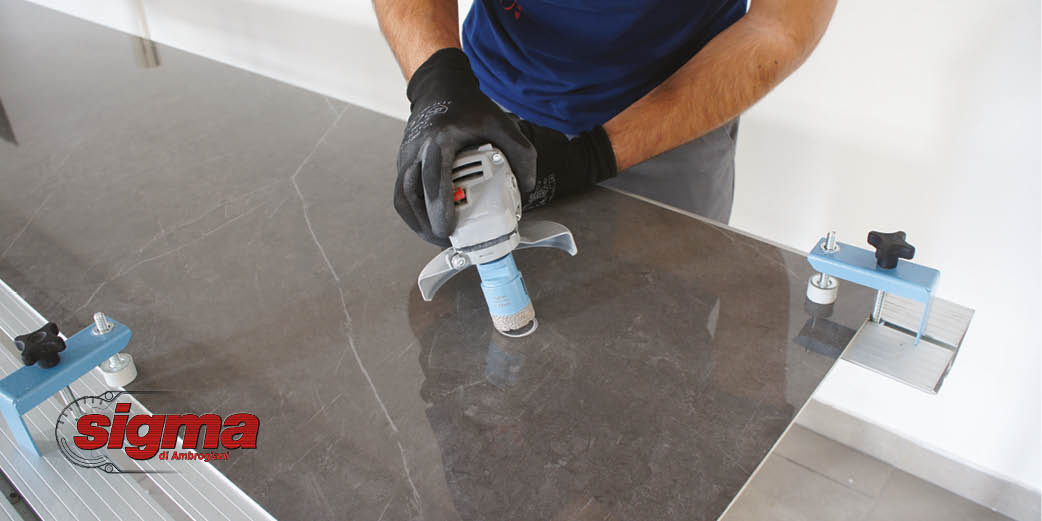
Position the Sigma diamond drill bit on the marked point at a slight angle rather than straight against the tile. Start the drill slowly and allow the diamond edge to bite into the surface. Once the bit has created a small groove and has securely gripped the tile, gradually bring the drill upright and continue drilling the hole.
This simple technique prevents the drill bit from skating across the surface, helping to protect expensive porcelain, ceramic and natural stone tiles from scratches, chips and damage.
Sigma diamond tile drill bits
Sigma diamond drill bits are made for the work tile installers carry out every day: fixing through porcelain, bringing pipework through tiled walls, fitting showers, cutting tap holes and drilling openings for basin, bath, shower and sink wastes.
Choose the right size, drill accurately and finish the installation properly.
Need help choosing the right Sigma drill bit?
For product information, drill-bit sizing or advice on your tiling project, speak directly with the Sigma UK team.
Call Sigma UK: 02392 791230